
Written by Andi Laidlaw, GIS Analyst and Drone Pilot
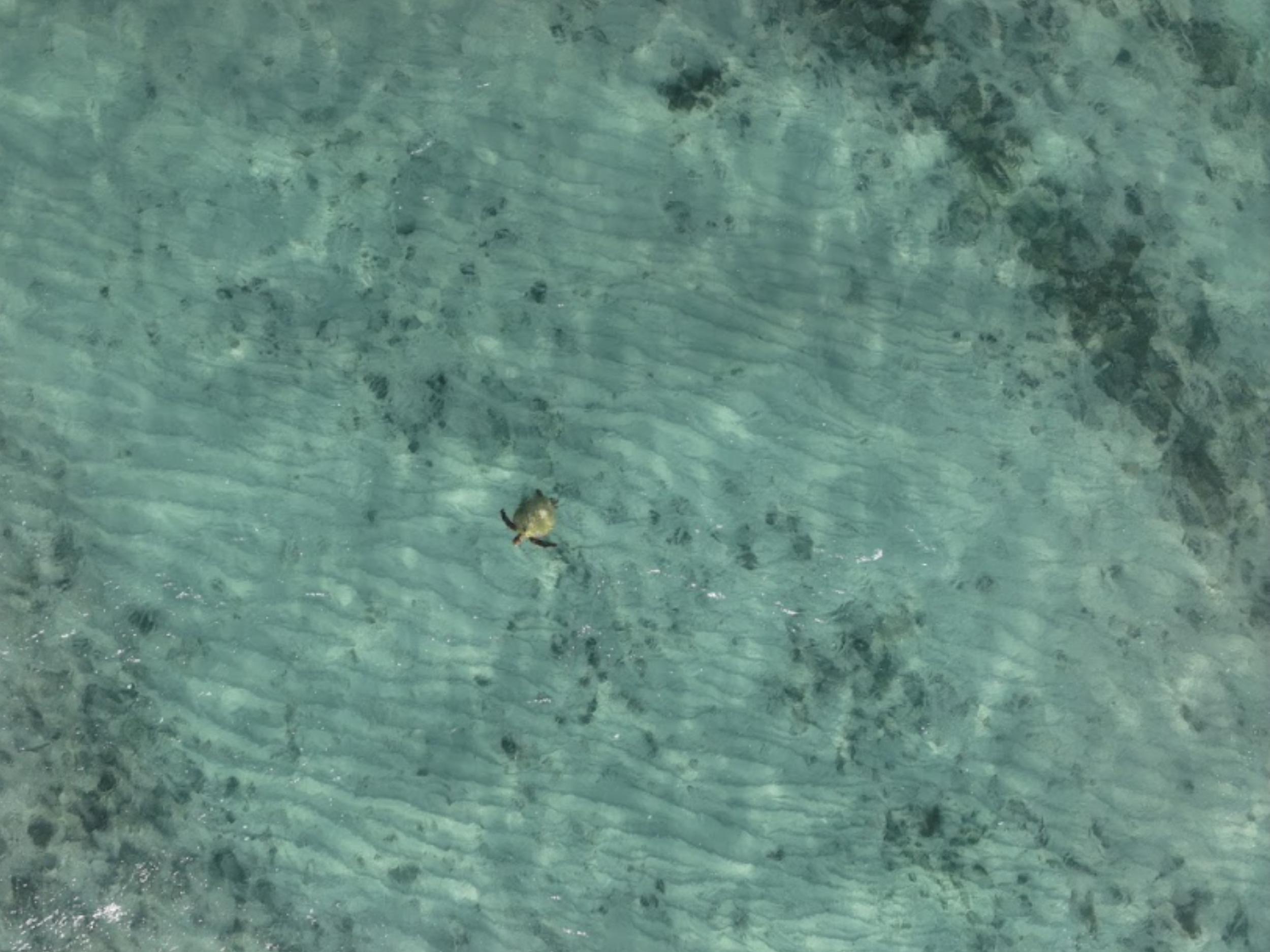
In October I went on a dream work trip to Murujuga, Ngarda-Ngarli Country, to support the Murujuga Rangers with drone surveys of turtle nesting beaches and participate in the Department of Biodiversity, Conservation and Attractions (DBCA) Parks and Wildlife Service Rosemary Island Turtle Program (RITP), one of WA's longest-running marine turtle research programs.
Winyama was engaged through the Pilbara Ranger Network to help build Murujuga Aboriginal Corporation’s (MAC) drone capability and process orthomosaics for them during the 2026 sea turtle nesting season.
While I was on the island, I helped the rangers, DBCA staff, and volunteers monitor nesting sea turtles through capture-mark-recapture methods, where we record tagged turtles and tag and measure new turtles. Here are the highlights from my trip:
I flew from Perth to Karratha where I stayed the night, before meeting the team early Wednesday morning in Dampier. I had the pleasure of meeting Anna Vitenbergs (OAM), who started RITMP in 1986 as a citizen scientist. I learned that in the early days of the program, Anna would camp on Rosemary Island alone, collecting data on nesting sea turtles. It felt extra special to be part of the 40th year of the program and to meet the woman who started it all.
Rosemary Island is a culturally significant women’s place of fertility and birthing where Indigenous men are not permitted to go. It hosts one of the world’s largest nesting populations of the critically endangered hawksbill sea turtle. Female sea turtles return to the island year after year to lay their eggs.
Did you know: Rosemary Island is in the Dampier Archipelago in the Pilbara region of Western Australia. The islands of the Archipelago and the Burrup Peninsula together are known in Ngarluma-Yaburara language as Murujuga, meaning “hip bone sticking out.”
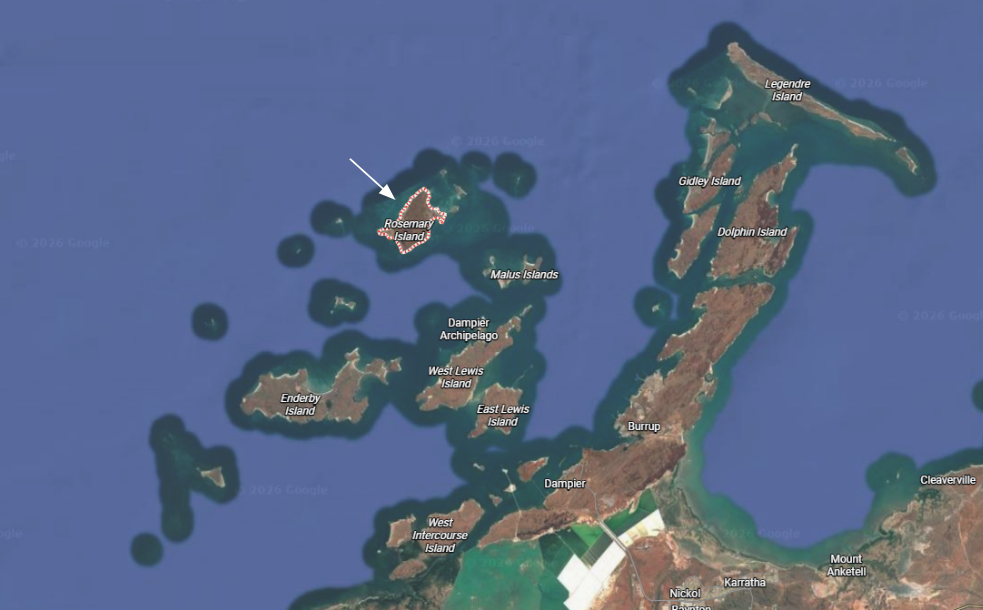
Screenshot taken from Google Maps Imagery 2026 Airbus, CNES / Airbus, Landsat / Copernicus, Maxxar Technologies, Map Data 2026
MAC Cultural Advisor Belinda Churnside gave a Welcome to Country for the team before we boarded Parks & Wildlife’s vessel Imbricata and headed out to Rosemary Island. Upon arrival, we were greeted by a pod of Australian humpback dolphins. Once the team was all on the island, MAC Senior Ranger, Sarah Hicks announced our presence with a sing-out, asking the spirits of the island for protection while we were there.
Once we unloaded our gear from the boat, we got straight to work setting up camp.
The sleeping quarters.
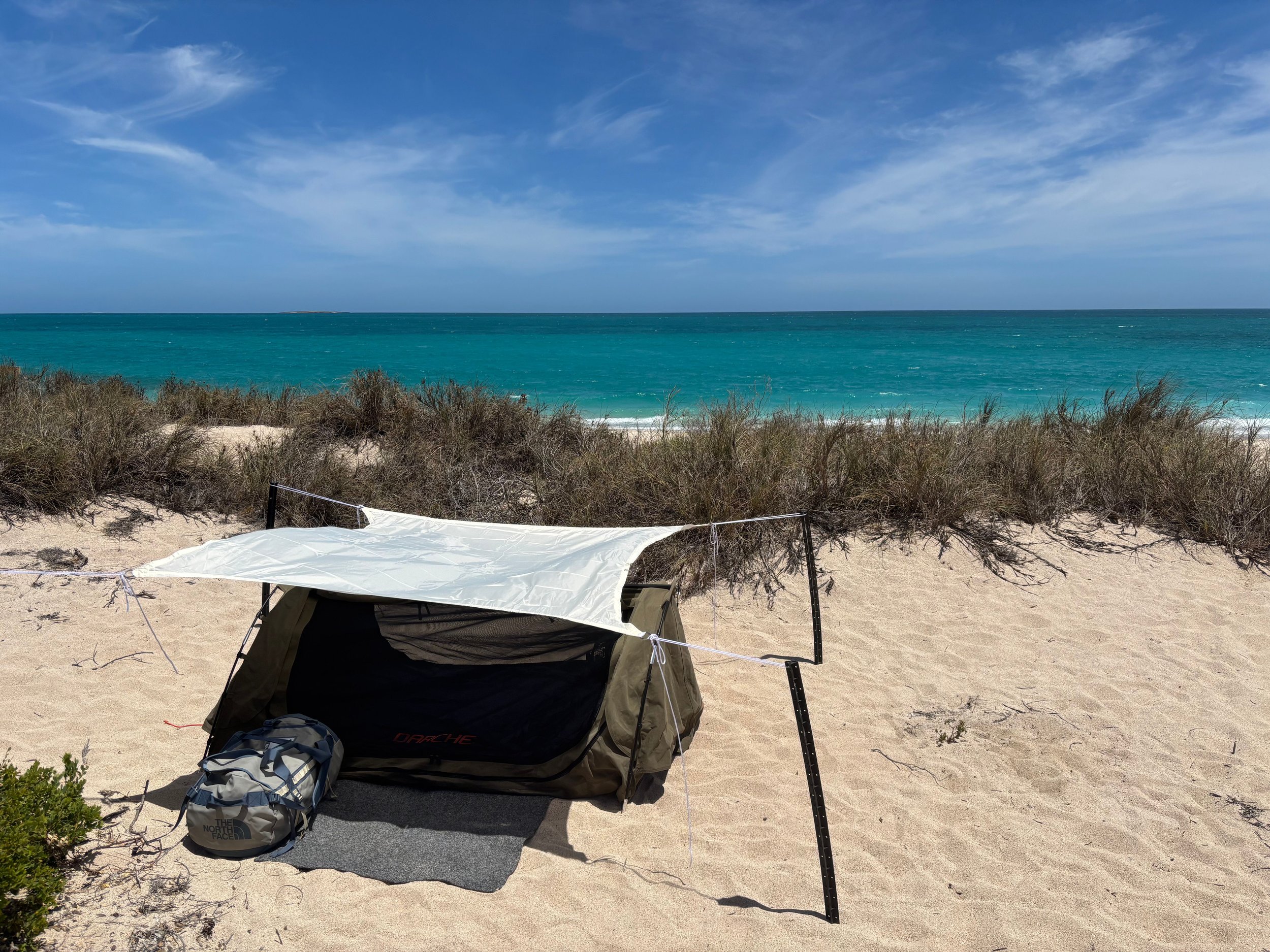
The office.
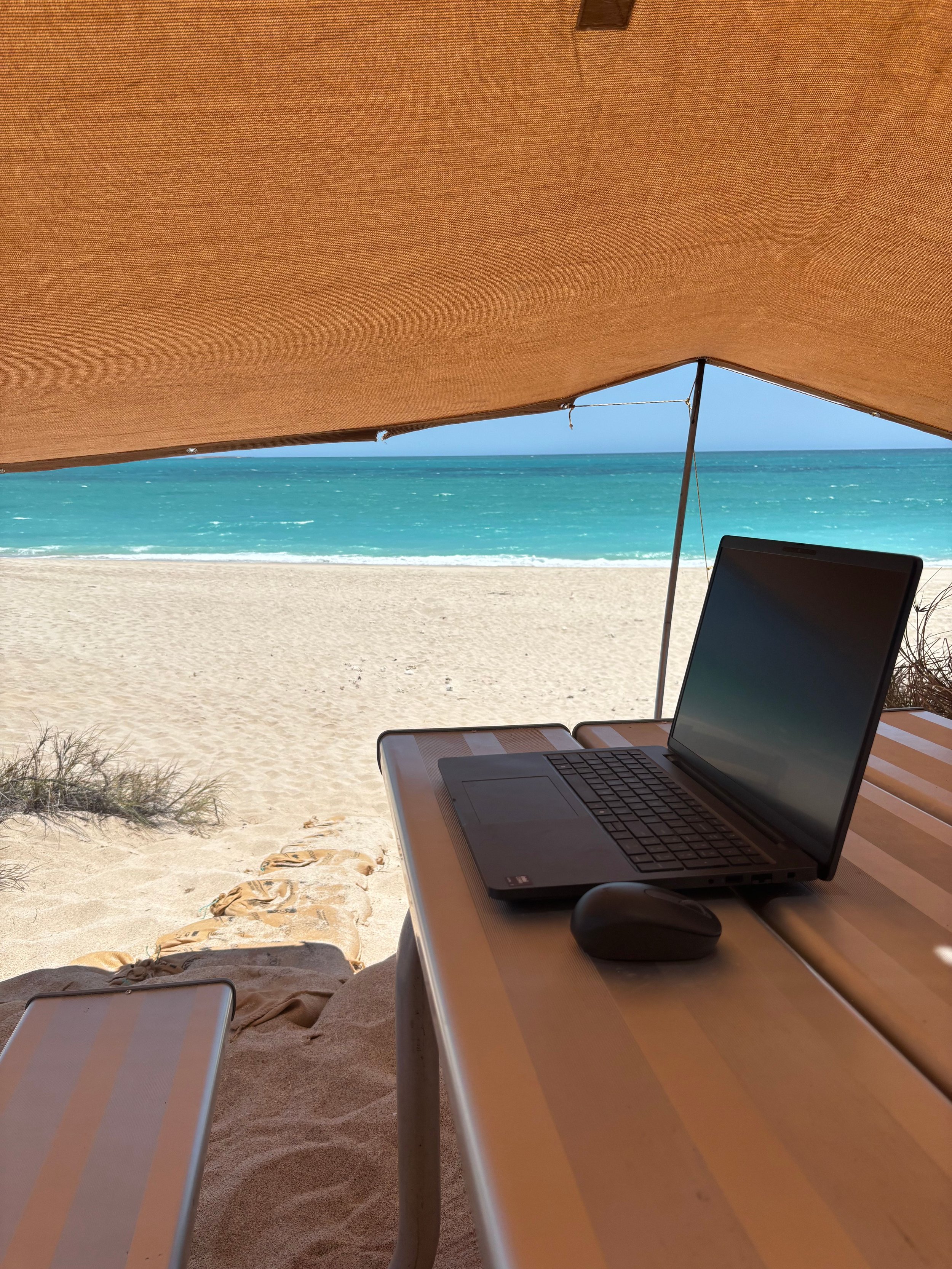
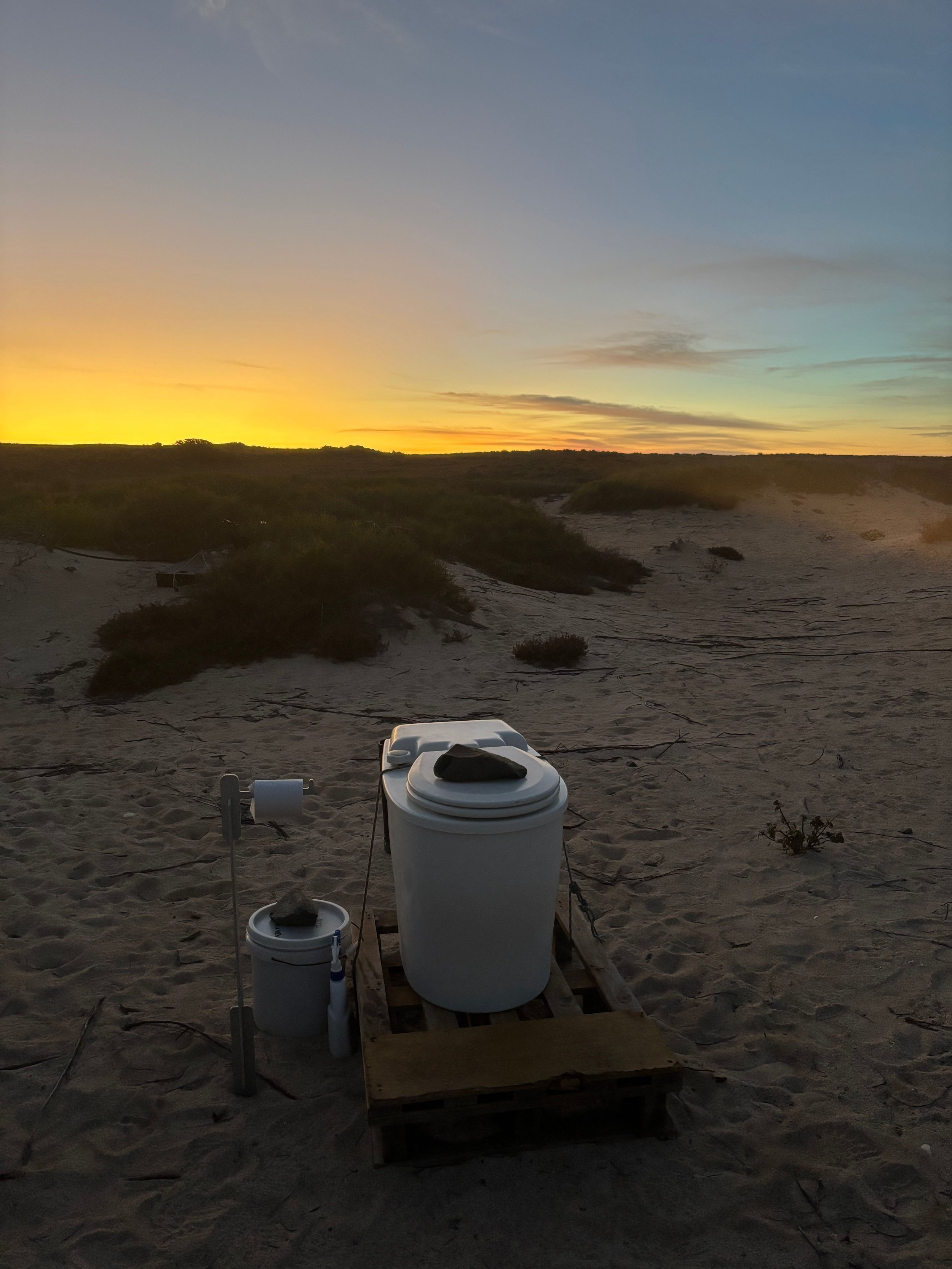
The loo with a view.
The Hawksbill Hut research station.
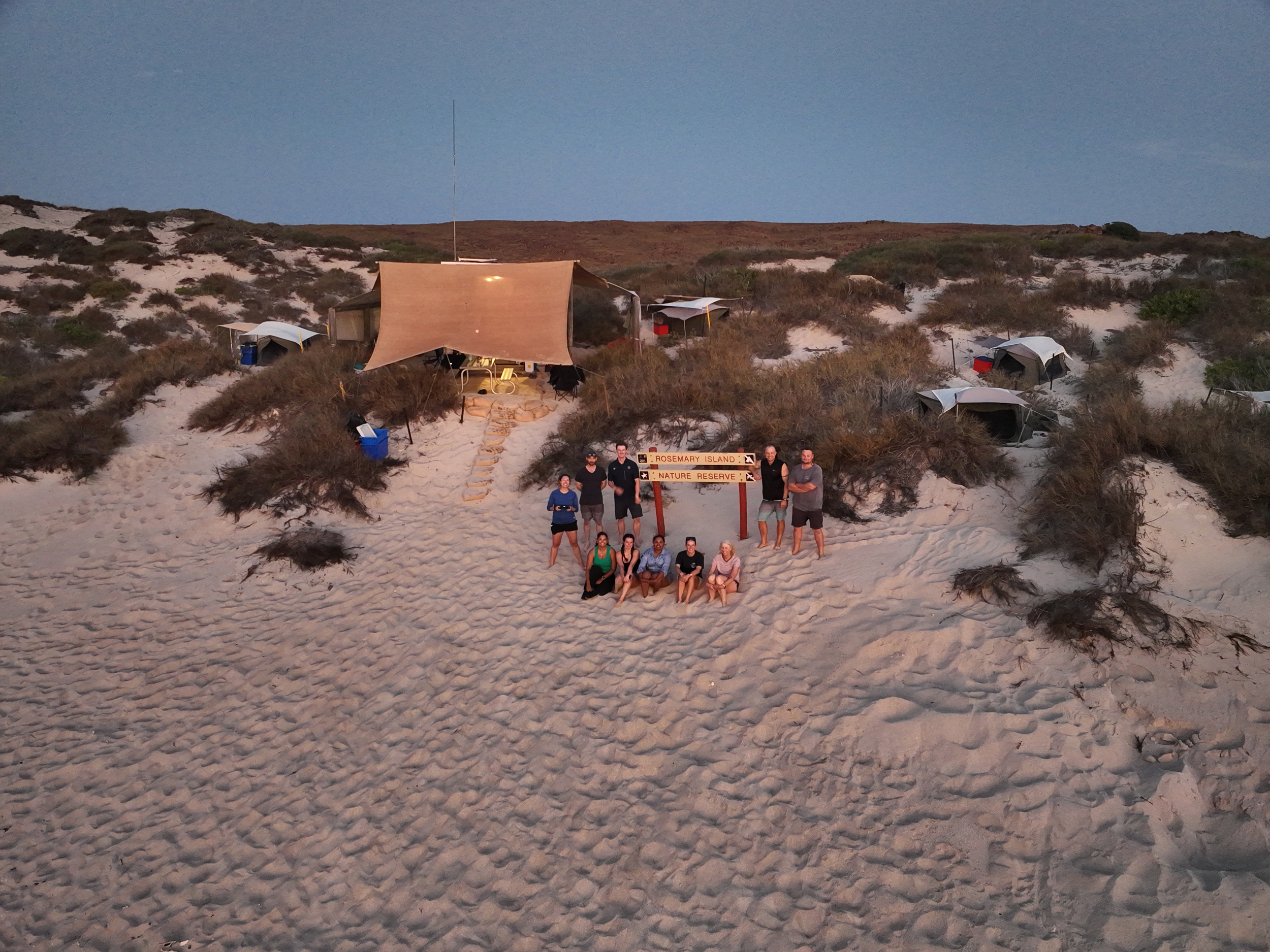
Front row (from left): Anna Martin, Caitlin Steytler, Sarah Hicks, Nikki Forrester, Kate Gatti.
Back row (from left): Andi Laidlaw, Steve Smartt, Kale Dyktynski, Tim Hunt, Sam Kelly.
The night shift
On the first night, the team was given an introduction to turtle monitoring where we patrolled a few of the beaches and happened across our first nesting hawksbill turtle. This was the first time I had ever seen a sea turtle nesting, a bucket list experience for me! Turtles mostly nest at night around high tide, so the team walked along the beaches in the dark, looking for nesting females. We patrolled five nesting beaches along the Rosemary Island coast and used low-frequency red light to minimise disturbance to the turtles.
The turtle nesting process can take hours from when they emerge from the water to when they return.
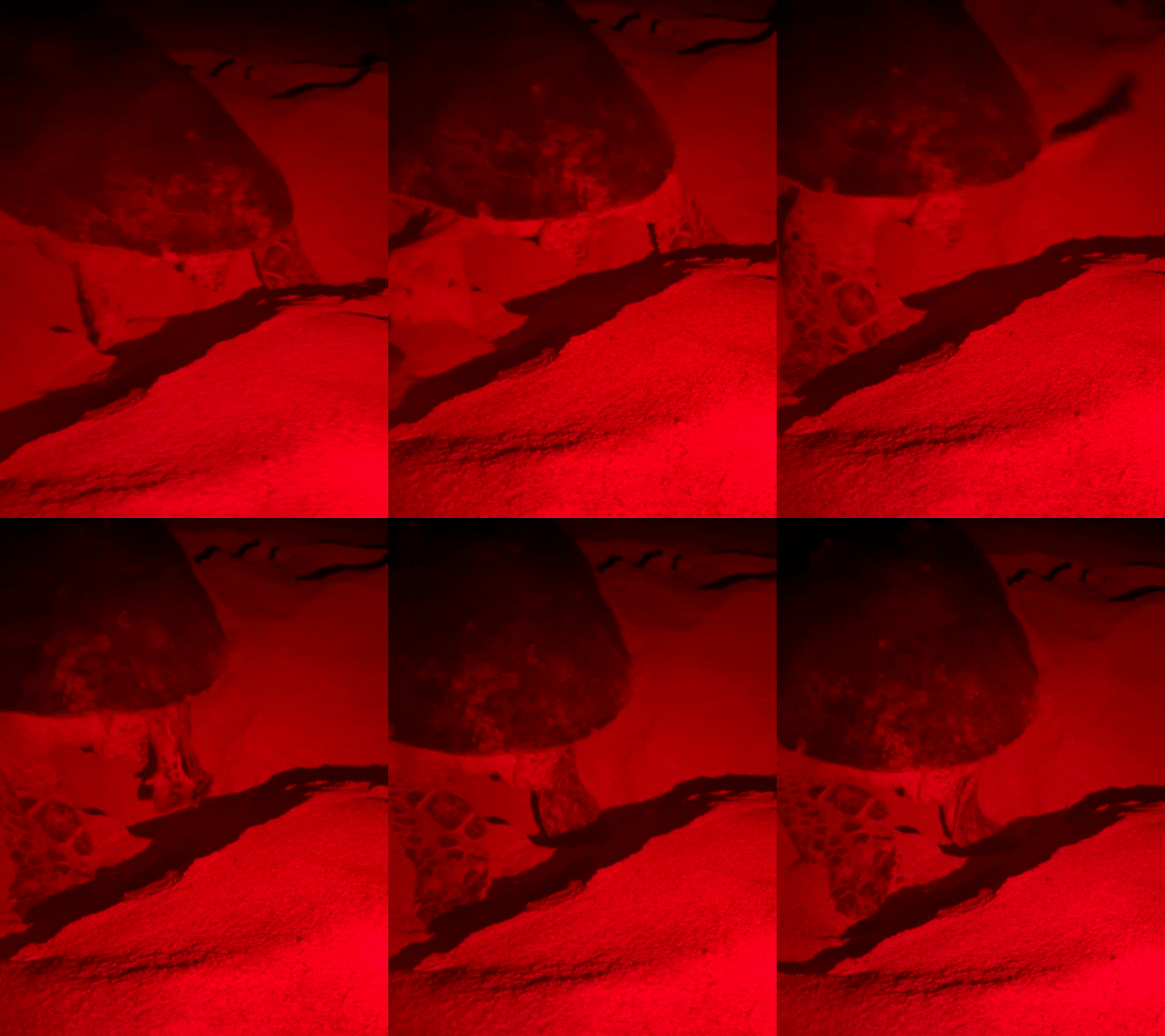
A female turtle chambering
Once the female turtle has made her way up the beach, she will dig a body pit, then begin chambering with her rear flippers, creating a deep, narrow hole for her eggs.
Then she will enter a trance-like state and lay around 150 eggs.
Finally, she will carefully cover her eggs with sand using her rear flippers and throw sand backwards over the nest with her front flippers, camouflaging the nest from predators.
She will then return back to the ocean.
Did you know: sea turtles possess an innate skill in navigation. They spend most of their lives at sea, sometimes travelling thousands of kilometres, and females will return to the same beach they hatched from to lay their own nest of eggs every year.
I learned that in the 40 years of RITMP, there have been many returning turtles; most notably in 2020, one turtle was recorded that had been tagged in the same location 30 years earlier. She’d been coming to nest at the same beach for three decades!
The morning shift
With a small team and several kilometres of beach to cover every night, some turtles get missed. Luckily though, they leave very obvious tracks in the sand. So at first light each morning, we would walk the beaches to find the tracks we’d missed and record them.
To avoid recounts, we would draw a line through the sand across every track that we’d already recorded. Any fresh track crossing over that line was a turtle that hadn’t been accounted for yet.
Turtle tracks.
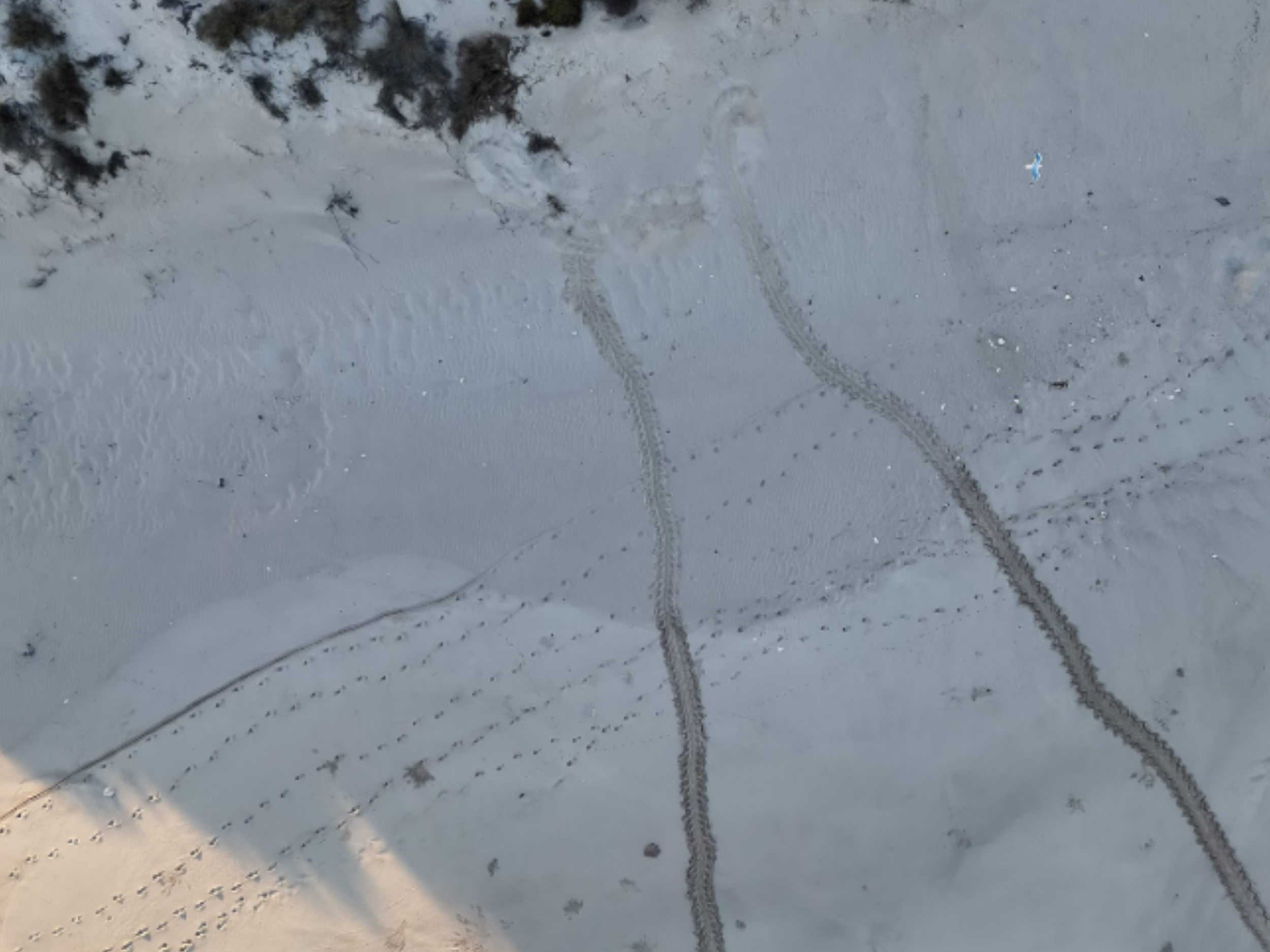
This is where drone surveys came into play as we explored an alternative method for counting missed tracks.
I supported MAC’s rangers: Anna Martin, Peaches Beazley, and Sarah Hicks in creating flight plans for each of the five nesting beaches we were monitoring. We flew their DJI Matrice 4T drone at 30 meters above ground level, collecting hundreds of photos that would later be processed and turned into orthomosaics. We then collected the missed track data on foot for ground truthing.
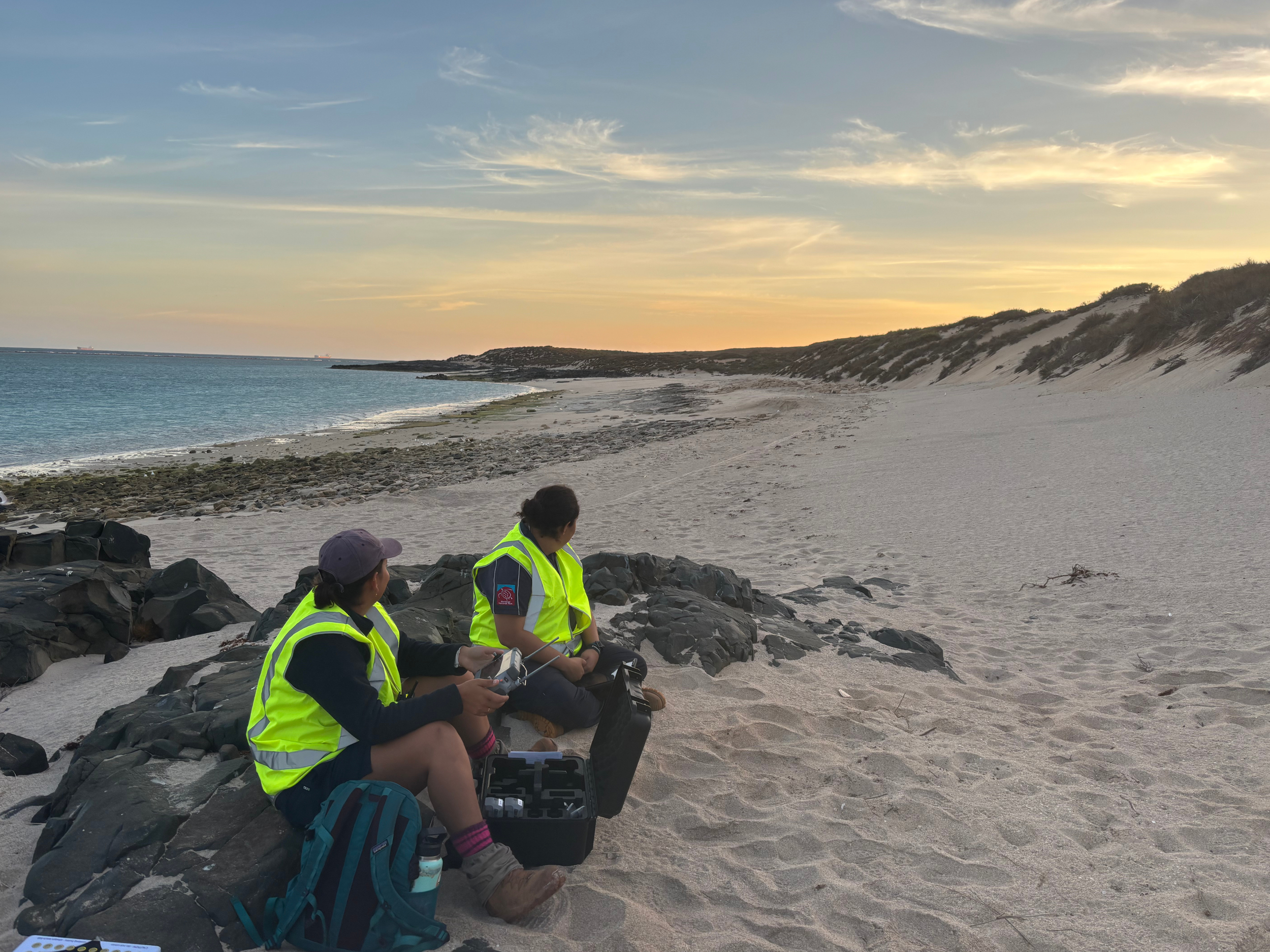
On left: Anna. On right: Peaches
The high-res drone imagery we collect from these surveys will allow us to not only identify missed tracks, but also determine direction of travel, species of turtle, and differentiate between false crawls and potential nesting activity.
I said goodbye to most of the team the night before my departure since I was getting picked up from the island in the morning when they’d be asleep after a long night of turtle monitoring. I feel so lucky to have spent the week with such a charismatic and dedicated team.
It was an extraordinary experience, and I feel particularly privileged to have had the opportunity to meet and work closely with other women in conservation in a culturally significant women’s place amongst the female sea turtles. A special thanks to Murujuga Aboriginal Corporation and DBCA for having me.
